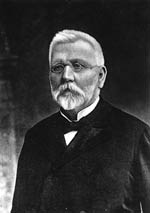
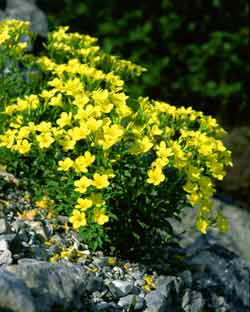
Vince Borbás, an outstanding researcher of the flora around Budapest, is often referred to as the "most Hungarian botanist". He deserves the honorary title, as he has described several native plant species of Pannonian origin. The most striking of his discoveries, the Pilisi lent ( Linum dolomiticum ), was presented at the meeting of the Natural History Society on 13 January 1897. Borbás's exceptional skill is shown by the fact that he also recognised that the closest relative of the newly discovered species was a species of flax from Greece, Linum elegans. The memory of Vince Borbás is still kept alive in the Széchenák, where one of the most valuable dolomite hills in the area is called Borbás Ridge.
Vince Borbás (1844 - 1905)
Botanist, researcher of the flora of the Buda Hills ( Natural History Museum collection)
Linum elegans
Linum dolomiticum
Károly Kaán (1867-1940), forest engineer, the developer of the principles of nature conservation in Hungary.
In his book Nature Conservation and Natural Monuments, published in 1931, Károly Kaán, who developed the principles of Hungarian nature conservation, proposed the designation of a reservation in a part of the Small and Great Sénás in order to protect rare plants. At the same time, the former landowner of Pilisszentiván, Count Imre Karátsonyi, was also responsible for the protection of the Pilis flax. However, it was not until after the World War II, in 1951, that two small areas were declared protected and became part of the Buda Landscape Protection Area, established in 1978. In 1994, part of the area was declared a forest reserve, i.e. an area where no human (forestry) interference of any kind takes place, so that undisturbed natural processes can be studied.
The area was awarded the European Diploma in 1995. The title was renewed for five years in 2000 and again in 2005. When the Diploma was renewed in 2005, the Hungarian side received the following recommendations:
1. A single organisation should be designated for the complex management of the area in order to give nature conservation a clear priority; this should be the regional directorate of the nature conservation organisation, i.e. the Danube-Ipoly National Park Directorate. 2. Only activities that are consistent with the conservation objectives of the site should be permitted in the management of big game in and around the site. Particular attention should be paid to the eradication of mouflon and fallow deer and the reduction of large herbivores to levels consistent with the conservation of dolomite grassland and semi-natural woodland. Game management should be organised on the basis of accurate monitoring of populations. 3. Old fences within the area should be dismantled and the entire European Diploma Area fenced off to prevent illegal off-road motorcycling and to increase the effectiveness of wildlife management. 4. Financial and human resources commensurate with the national and European importance of the area should be ensured beyond the LIFE programme. 5. Measures should be taken to control non-native tree species (Robinia pseudoacacia and Pinus nigra), giving priority to the most ecologically valuable zones. A separate core area should be designated where only such forestry intervention can be carried out. This core area should cover at least half of the European Diploma Area and include the entire stand of Linum dolomiticum, grassland, steep slopes and the forest reserve. 6. Develop the area's capacity to host tourism. This should be done by organising guided tours outside the most sensitive areas to increase society's sense of responsibility for the conservation of the habitats in the area. Measures should be taken to prevent the increasing use of off-road motorised vehicles. 7. Ensure the maintenance of the two protected areas on the edge of the SPA for which the award of the diploma has also been requested, so that they can act as buffer zones. No construction is allowed. 8. Urban pressure around the area should be strictly controlled. Any new development plans in Nagykovácsi, Pilisszentiván and Piliscsaba should be monitored closely. 9. Continue to work with volunteers (schools, NGOs, scouts), local residents and vigilante groups. 10. The new management plan should be finalised and the possibility of separating the Szénás Hill Group from the Buda Landscape Protection Area should be examined.
The European Diploma awarded to the Szénás-Hegyroup (Photo: Pá Kézdy
From 2008, the management of the area is to be carried out on the basis of the Decree 17/2008 (VI. 3.) of the Ministry of Agriculture, Forestry, Environment and Water Management on the nature conservation management plan of the European Diploma Area of the Coal Mountains Group.
Animals
The animal world of the Haymakers
The dolomite vegetation provides diverse habitats for wildlife (Photo: Zsolt Kalotás)
Cougars Europe The zoological values of the Diploma area include the invertebrate fauna. The diversity of fauna is mainly due to the diversity of plant communities: from old beech trees to open rocky grasslands, the area is populated by animals from a wide range of habitats. The invertebrate fauna is characterised by a predominance of species with a Mediterranean and continental distribution.
Saw-footed grasshopper (Saga pedo) Photo: György Szollát)
Saw-footed grasshopper (Saga pedo). Europe's largest insect species. The northern limit of its range is the Carpathian Basin, where it breeds by asexual reproduction. It is a rare inhabitant of dry, warm steppe grasslands with dense vegetation. Despite its large size, it is difficult to spot, as its colour and movement resemble that of a branch moving in the wind. It leads a predatory lifestyle.
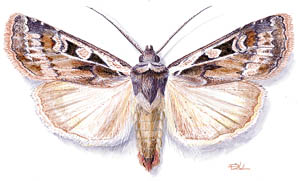
Euxoa vitta (painting by László Pál)
Barred burrowing owl (Euxoa vitta): A species of butterfly with an Atlantic Mediterranean distribution. Inhabitant of open limestone and dolomite grasslands, it is very sporadic in Central Europe. Its population in the area is relatively large and stable. Its caterpillar lives in short underground burrows from which it rarely emerges to pull nearby plants into its burrow to feed.
Eastern crab flower (Libelloides macaronius) (Photo: András Kun)
Oriental predatory pill(Libelloides macaronius). A species of insect with a Mediterranean distribution that, despite its butterfly-like appearance, is a member of the order of the ciliates. The fast-moving adult insect is short-lived and swarms for a short period of time, so its presence is not easily detected. It is regularly observed in the field.
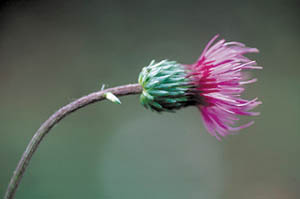
The bedrock of the area - Triassic dolomite - forms a varied, varied, ridge-and-valley surface, with a mosaic of fresh and dry oak woodland, karst scrub, steppe and rocky grassland. The southern slopes, with their dry, warm microclimate, are separated from the cold northern slopes by only a few metres, so that the vegetation has been able to survive the great climatic changes almost unchanged by migrating only a few metres. In the cold northern valley sides, glacial plants that have been extirpated from elsewhere in the Carpathian Basin have survived and are now high mountain species. These include purple loosestrife ( Festuca amethystina ), the variegated reed canary ( Calamagrostis varia ) and the grey thistle (Carduus crassifolius subsp. glaucus ).
Pilis flax (Linum dolomiticum) ? its entire world population is preserved in the Szénás mountain group (Photo: Zsolt Kalotás)
Inbred plants. Plant species that survived in refugia - refugia - could have become a distinct native species in isolation from their conspecifics. King Stephen's sedge occurs only in the dolomitic rocky grasslands of the Transdanubian Central Mountains
( Dianthus plumarius ssp. regis-stephani ) and Hungarian gargoyle ( Seseli leucospermum ).
( Sorbus semiincisa ) is found in the Buda Hills and the Pilis. One of the most famous indigenous plants of the Hungarian flora is the Pilis flax ( Linum dolomiticum ), which is found only here in the world.
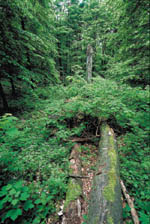
Forest view on the Kutya hill (Photo: Zsolt Kalotás)
In the valleys of the dolomite hills you will find closed forests. In the hornbeam-oak forests, the species that give the association its name include bird cherry, beech, small and large-leaved linden and tall ash. Hikers find these forests beautiful, but the conservationist is critical of the trees of the same age and the lack of dead trunks. These are evidence of a long period of intensive forestry in the area. It is hoped that in a few decades' time we will see many of the same forest scenes: old beech trees will have fallen down to provide a habitat for many species, and young lime saplings will have emerged in the gaps where they once stood.
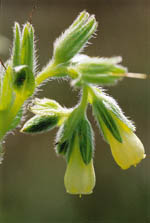
Onosma pseudarenaria (Photo: Zsolt Kalotás)
Secondary, but species-rich mountain meadows, steppe meadows and rocky grasslands have developed on the reapers and pastures created by deforestation. The largest grassland area of this type is the Great Zena, but there are also extensive grassland patches at the base of the Kutya Mountain. Today, these grasslands are also habitats for rare plant species such as the native bloodroot ( Onosma pseudarenaria ) or the sand daisy ( Iris arenaria ).
The trail
Dear Visitor!
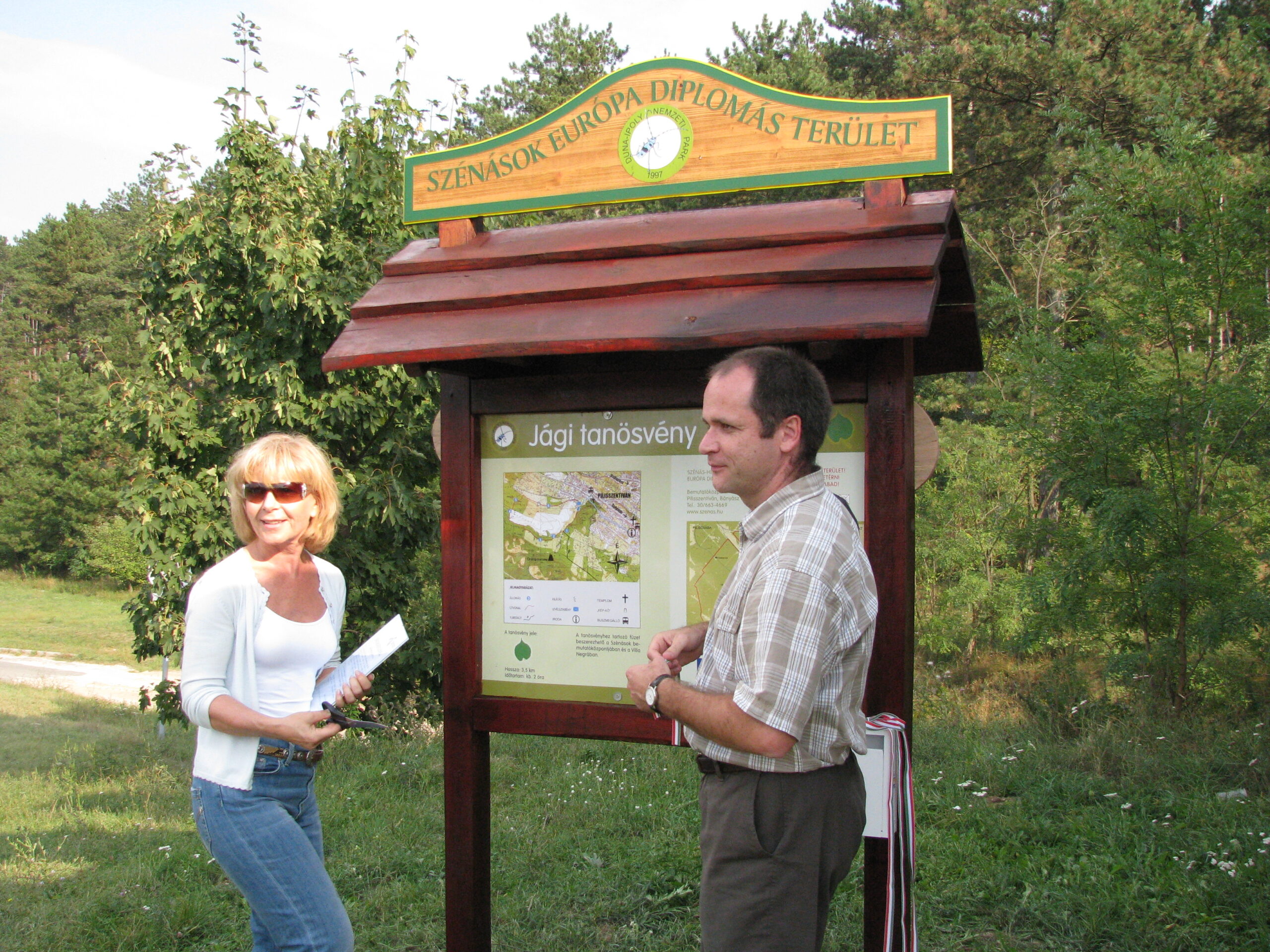
Welcome to the starting point of the Jagi trail. If this is your first time here, you may not have heard of Lake Iago. The tourist map of the Buda Hills does not have a name for the lake near Pilisszentiván, and the neighbouring Jági-rét is also called Vadász-rét. But we have given the trail a name that sounds natural to the locals. Germans have lived in Szentiván since the 1720s and have passed on not only the geographical names but also the natural values to their descendants.
The present coat of arms of the village is a shield divided into four parts. The sun is a symbol of the summer solstice, St. Ivan's Day, the cross represents the faith of the local people, the miner's badge shows that until 1969, coal mining was the main source of livelihood for the locals, and in the bottom right corner is the only flax in the world, the Pilis or Pilisszentivan flax, the best known representative of the special natural wealth of the village. For over two hundred years, the landscape of the Little and Great Zénás, whose values you can discover here, has been a pilgrimage destination for zoologists and botanists. The former landowner of Pilisszentiván, Count Imre Karátsonyi Karátsonyi, took care of the protection of the Pilis flax as early as the early 1930s, anticipating the 1935 Forest Act, the first law on the protection of domestic flora and fauna. In 1995, the Council of Europe awarded the area a European Diploma, recognising not only the uniqueness of the natural values of the area in Europe, but also the importance attached to their conservation by the local population.
Please take care of them too! We wish you a pleasant and exciting journey of discovery!
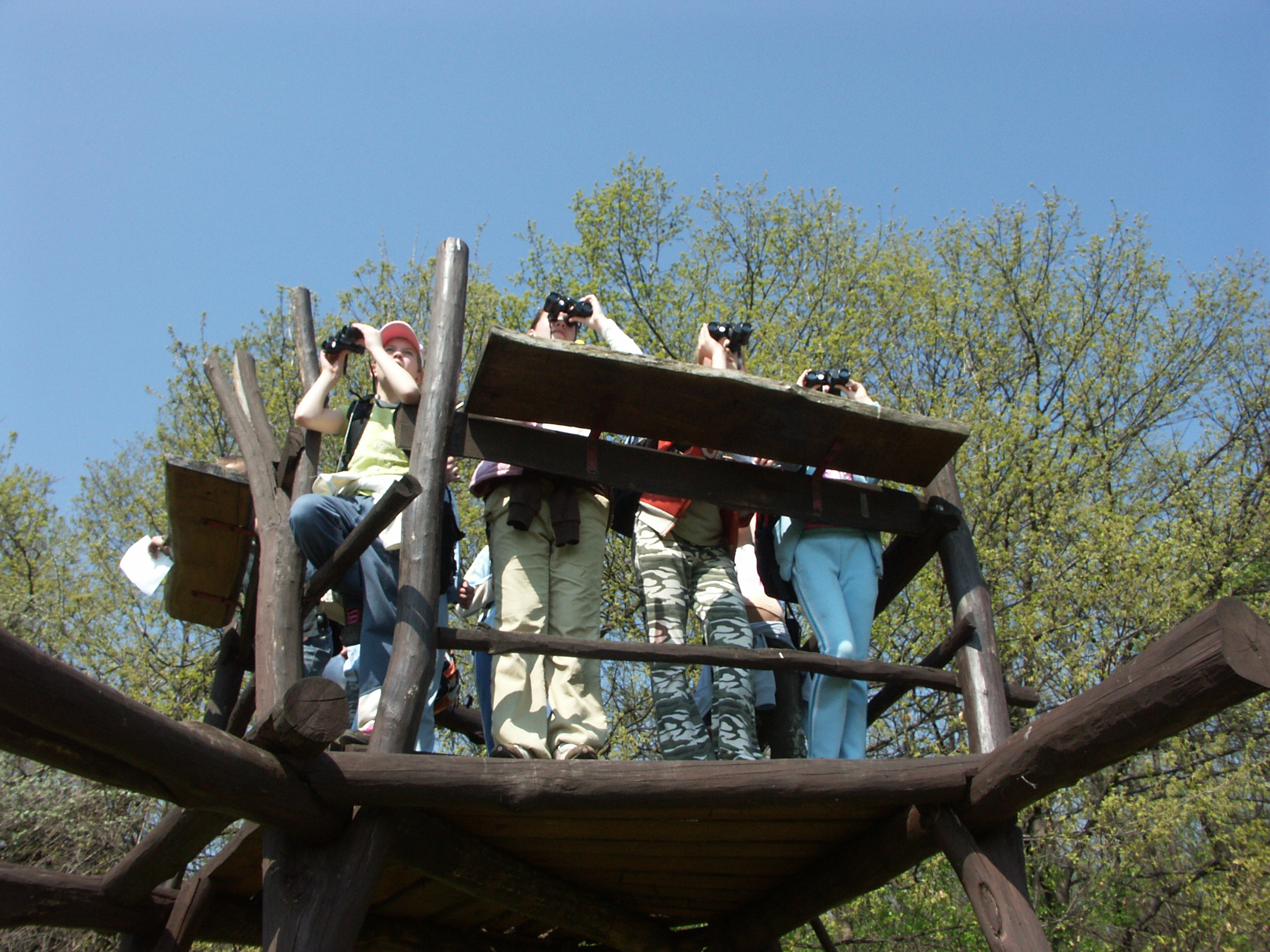
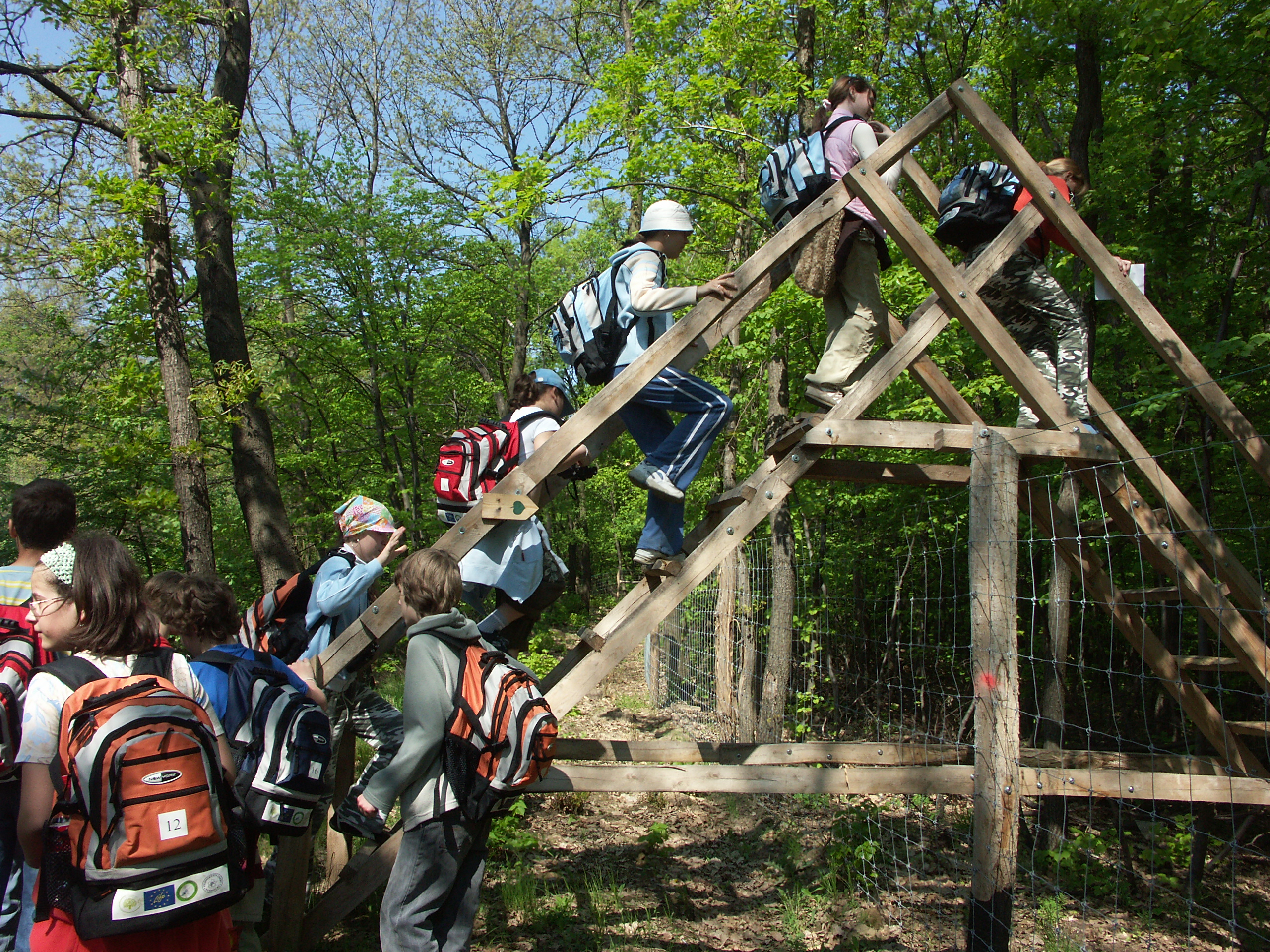
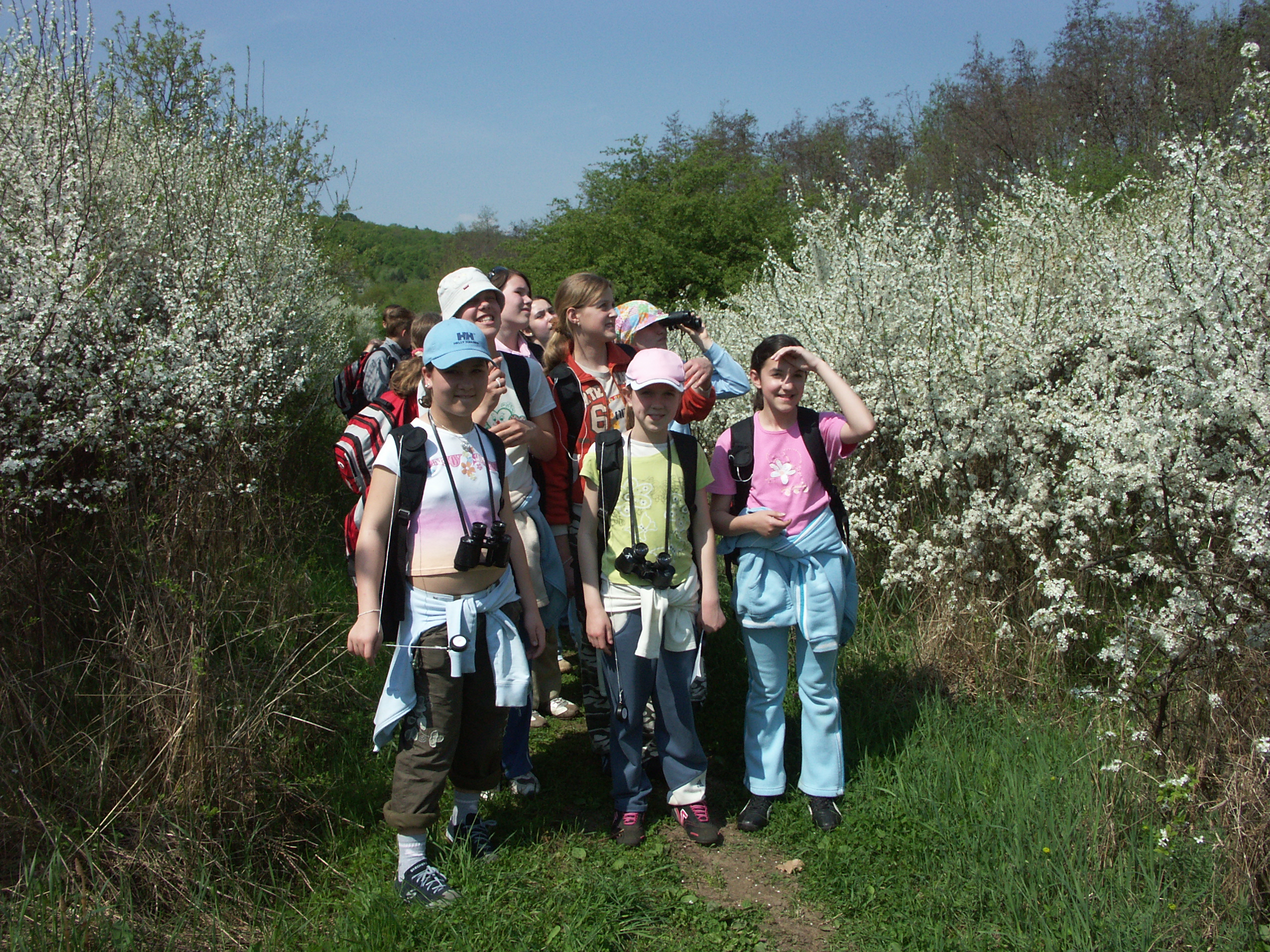
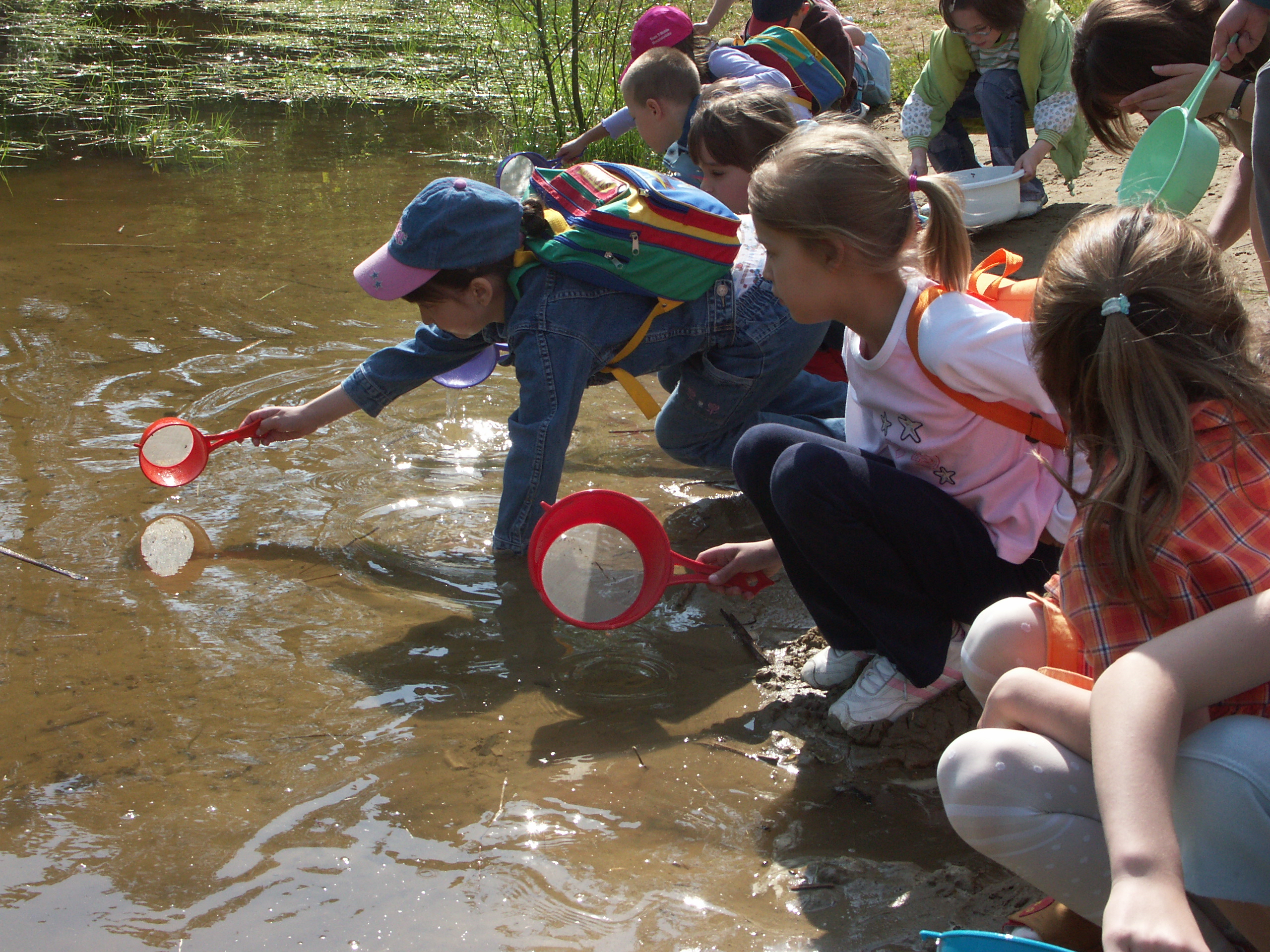
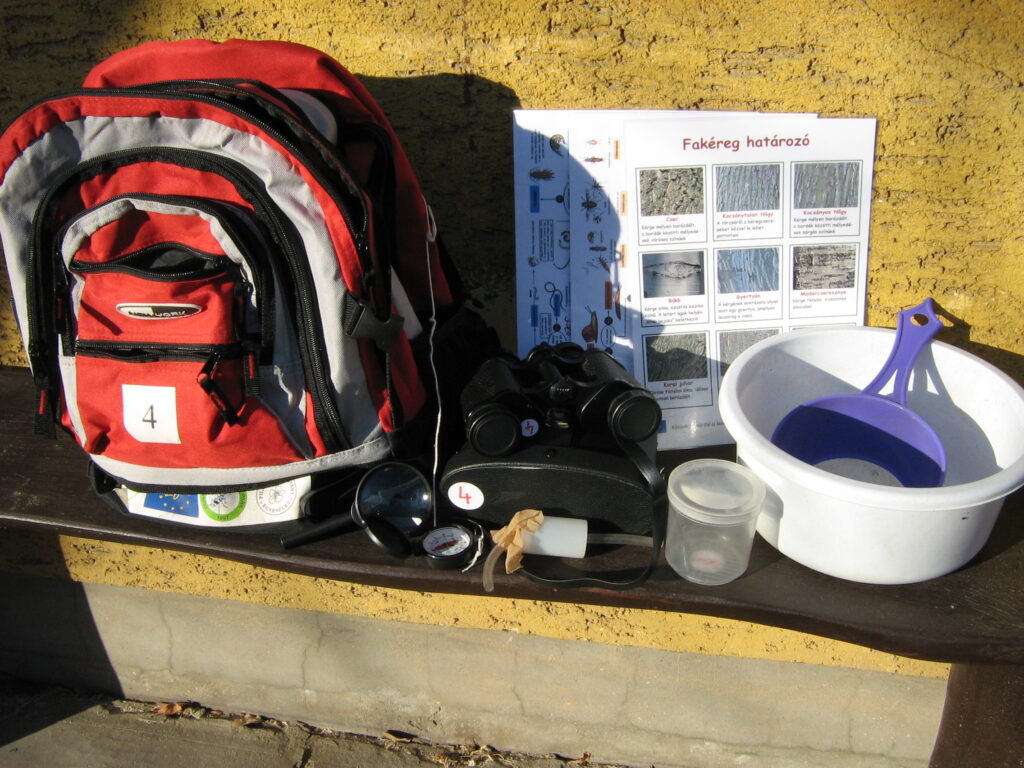
The Jagi trail can also be hiked with a nature study backpack, guided by a professional guide, containing all the equipment needed to observe nature. For a guide, please call 06-30/511-1802.
The trail booklet can be downloaded from www.szenas.hu, or purchased at the Pilis Flax Visitor Centre (Pilisszentiván, Bányász u. 17., prior registration required at 06-30/511-1802) and at the trailhead at Villa Negra.
Fitting the nature study backpack
Visitors Centre
In December 2003, the Danube-Ipoly National Park Directorate opened the Pilis Flax Visitor Centre at 17 Bányász u., Pilisszentiván, where a small exhibition was also housed. If you have any questions about the flora and fauna of the area, you won't find a better place to ask.
The exhibition is open by appointment. To register, call 06-30/663-4669 or szenasok@dinpig.hu by e-mail.